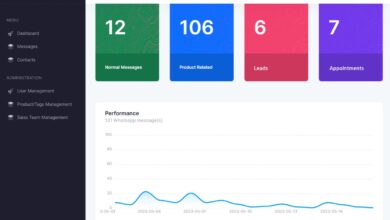
Ever wondered how top companies manage customer relationships so seamlessly? The secret often lies in a robust CRM base de donnee system. It’s not just a tool—it’s a game-changer.
Understanding CRM Base de Donnee: The Core Concept

A CRM base de donnee, or customer relationship management database, is the backbone of modern customer engagement. It’s where every interaction, transaction, and preference is stored, analyzed, and leveraged to improve business outcomes. This centralized system allows organizations to maintain a 360-degree view of their customers.






What Is a CRM Base de Donnee?
At its core, a CRM base de donnee is a digital repository that collects, organizes, and manages customer information. This includes contact details, purchase history, communication logs, service requests, and behavioral data. Unlike traditional spreadsheets, a CRM database is dynamic, scalable, and integrated with other business tools.
- Stores structured and unstructured customer data
- Enables real-time access across departments
- Supports automation and analytics
According to Gartner, CRM systems are among the most widely adopted enterprise software solutions globally, with database functionality at their heart.
How CRM Base de Donnee Differs from Traditional Databases
While all CRM systems rely on databases, not all databases are designed for CRM. A CRM base de donnee is purpose-built for customer-centric operations. Traditional databases may store data efficiently but lack the workflow integration, user interface, and analytical tools that CRM systems provide.
- CRM databases are optimized for interaction tracking
- They support multi-channel engagement (email, phone, social media)
- They offer built-in reporting and segmentation tools
“A CRM base de donnee transforms raw data into actionable insights, turning customers into loyal advocates.” — Forbes Insights, 2023
Key Components of a CRM Base de Donnee
To fully harness the power of a CRM base de donnee, it’s essential to understand its core components. Each element plays a critical role in ensuring data accuracy, accessibility, and usability across the organization.
Customer Data Management
This is the foundation of any CRM base de donnee. It involves capturing and maintaining accurate customer profiles. Data fields typically include names, addresses, job titles, company affiliations, and communication preferences.
- Ensures data consistency across touchpoints
- Reduces duplication through deduplication algorithms
- Supports GDPR and other compliance requirements
For example, Salesforce’s CRM platform uses AI-driven data cleansing to maintain high data quality, as detailed on their Data Cloud page.
Interaction Tracking and History
A powerful CRM base de donnee logs every customer interaction—emails, calls, meetings, support tickets, and social media engagements. This historical record enables personalized follow-ups and informed decision-making.
- Tracks communication timelines automatically
- Integrates with email and calendar systems
- Provides context for sales and service teams
This feature is especially valuable in industries like finance and healthcare, where audit trails are crucial.
Automation and Workflow Integration
Modern CRM systems automate repetitive tasks such as lead assignment, follow-up reminders, and data entry. These workflows are powered by the underlying CRM base de donnee, which triggers actions based on predefined rules.
- Reduces manual errors and increases efficiency
- Enables timely responses to customer inquiries
- Integrates with marketing, sales, and service platforms
HubSpot, for instance, offers workflow automation that syncs directly with its CRM database, allowing businesses to scale operations without increasing headcount.
Benefits of Implementing a CRM Base de Donnee
Organizations that deploy a CRM base de donnee gain a competitive edge through improved customer insights, operational efficiency, and revenue growth. The benefits extend across departments and touch every stage of the customer lifecycle.
Enhanced Customer Experience
With a unified view of the customer, support and sales teams can deliver personalized experiences. Whether it’s addressing a client by name or anticipating their needs based on past behavior, the CRM base de donnee makes it possible.
- Enables hyper-personalized communication
- Reduces response time through quick access to history
- Increases customer satisfaction and retention
A study by IBM found that companies using CRM databases report up to 34% higher customer satisfaction rates.
Improved Sales Performance
Sales teams leverage the CRM base de donnee to track leads, manage pipelines, and forecast revenue. Real-time data access ensures that no opportunity slips through the cracks.
- Provides visibility into deal stages and bottlenecks
- Supports data-driven coaching and performance reviews
- Enables accurate sales forecasting
Organizations using CRM systems see an average of 29% increase in sales productivity, according to Nucleus Research.
Better Data-Driven Decision Making
The CRM base de donnee serves as a single source of truth for customer analytics. Executives and managers can generate reports on customer acquisition costs, lifetime value, churn rates, and campaign effectiveness.
- Facilitates strategic planning with accurate metrics
- Identifies trends and market opportunities
- Supports A/B testing and optimization
“Data is the new oil, and the CRM base de donnee is the refinery.” — Clutch.co, 2022
Types of CRM Base de Donnee Systems
Not all CRM databases are created equal. Depending on business needs, organizations can choose from operational, analytical, and collaborative CRM systems—each with distinct features and use cases.
Operational CRM Base de Donnee
This type focuses on automating customer-facing processes such as sales, marketing, and service. The CRM base de donnee in operational systems supports day-to-day activities with real-time data entry and retrieval.
- Ideal for sales force automation
- Used in lead-to-cash workflows
- Common in B2B and B2C environments
Examples include Microsoft Dynamics 365 and Zoho CRM, both of which offer robust operational databases.
Analytical CRM Base de Donnee
Designed for deep data analysis, analytical CRM systems process historical data to uncover patterns and predict future behavior. The CRM base de donnee here is optimized for querying and reporting rather than transaction processing.
- Supports customer segmentation and profiling
- Enables predictive analytics and churn modeling
- Used by data scientists and business analysts
Tools like Oracle CRM Analytics leverage advanced algorithms to extract insights from large datasets.
Collaborative CRM Base de Donnee
This model emphasizes communication and information sharing across departments and channels. The CRM base de donnee acts as a shared workspace where teams collaborate on customer issues and opportunities.
- Integrates call centers, email, and live chat
- Improves cross-functional coordination
- Enhances omnichannel customer service
ServiceNow’s CRM solution is a prime example, offering collaborative tools built on a secure, scalable database.
How to Choose the Right CRM Base de Donnee for Your Business
Selecting the right CRM base de donnee requires careful evaluation of business goals, team size, industry requirements, and technical capabilities. A poor choice can lead to data silos, low adoption, and wasted investment.
Assess Your Business Needs
Start by identifying your primary objectives: improving sales, enhancing customer service, or scaling marketing efforts. Different CRM databases cater to different use cases.
- Small businesses may prioritize ease of use and affordability
- Enterprises need scalability, security, and integration
- Regulated industries require compliance-ready features
For example, a healthcare provider must ensure HIPAA compliance when selecting a CRM base de donnee.
Evaluate Scalability and Integration
Your CRM base de donnee should grow with your business. Look for systems that support modular upgrades, API access, and third-party integrations.
- Check compatibility with existing tools (ERP, email, accounting)
- Ensure mobile access and cloud deployment options
- Verify data migration support
Platforms like Pipedrive and Freshsales offer seamless integration with popular business applications.
Consider User Experience and Training
Even the most powerful CRM base de donnee fails if users don’t adopt it. Prioritize intuitive interfaces, role-based dashboards, and accessible training resources.
- Look for drag-and-drop customization
- Assess onboarding and support services
- Test user feedback and review ratings
According to Capterra, user-friendliness is the top factor influencing CRM adoption rates.
Implementation Best Practices for CRM Base de Donnee
Deploying a CRM base de donnee isn’t just about installing software—it’s a strategic initiative that requires planning, change management, and continuous improvement.
Data Migration and Cleansing
Before importing data into your new CRM base de donnee, clean and standardize it. Remove duplicates, correct errors, and enrich incomplete records.
- Use automated tools like Talend or Informatica
- Validate email addresses and phone numbers
- Map legacy fields to new CRM schema
Poor data quality is the leading cause of CRM project failure, per a McKinsey report.
Team Training and Change Management
Successful CRM adoption depends on user buy-in. Conduct hands-on training sessions, create user guides, and appoint internal champions.
- Offer role-specific training (sales, support, marketing)
- Address resistance through clear communication
- Monitor usage and provide feedback
Companies that invest in change management see 3x higher ROI from CRM implementations.
Continuous Monitoring and Optimization
A CRM base de donnee is not a set-it-and-forget-it solution. Regularly review performance metrics, update workflows, and gather user feedback.
- Track login frequency and feature usage
- Optimize reports and dashboards quarterly
- Update data governance policies annually
“The best CRM systems evolve with the business.” — Harvard Business Review
Common Challenges and How to Overcome Them
Despite their benefits, CRM base de donnee implementations often face obstacles. Recognizing these challenges early can prevent costly setbacks.
Data Silos and Integration Issues
When departments use separate systems, data becomes fragmented. A CRM base de donnee should act as a central hub, but integration with legacy systems can be complex.
- Use middleware or iPaaS solutions (e.g., MuleSoft, Zapier)
- Standardize data formats across platforms
- Prioritize API-first CRM vendors
Integration challenges affect 68% of CRM projects, according to Panorama Consulting.
User Resistance and Low Adoption
Employees may resist using a new CRM base de donnee due to fear of change, lack of training, or perceived complexity.
- Involve users in the selection process
- Demonstrate time-saving benefits
- Link CRM usage to performance metrics
Gamification and incentive programs can boost engagement.
Security and Compliance Risks
A CRM base de donnee contains sensitive customer information, making it a target for breaches. Non-compliance with regulations like GDPR or CCPA can result in heavy fines.
- Implement role-based access controls
- Encrypt data at rest and in transit
- Conduct regular security audits
Choose CRM providers with SOC 2 and ISO 27001 certifications for added assurance.
Future Trends in CRM Base de Donnee Technology
The CRM base de donnee is evolving rapidly, driven by AI, cloud computing, and customer expectations. Staying ahead of trends ensures long-term relevance and competitiveness.
Artificial Intelligence and Predictive Analytics
AI is transforming CRM databases into intelligent systems that predict customer behavior, recommend actions, and automate responses.
- AI-powered chatbots use CRM data for personalized interactions
- Predictive lead scoring improves conversion rates
- Natural language processing enhances data entry
Salesforce Einstein and Microsoft AI for CRM are leading this innovation.
Cloud-Native and Mobile-First Architectures
Modern CRM base de donnee systems are built for the cloud, offering scalability, remote access, and automatic updates.
- Supports hybrid and remote workforces
- Reduces IT maintenance costs
- Enables real-time synchronization across devices
Cloud CRM adoption grew by 45% in 2023, per Statista.
Hyper-Personalization and Customer Journey Mapping
Next-generation CRM databases enable businesses to deliver personalized experiences at every touchpoint.
- Tracks customer journeys across channels
- Delivers context-aware content and offers
- Uses behavioral triggers for real-time engagement
Brands like Amazon and Netflix set the benchmark for personalization powered by CRM data.
What is a CRM base de donnee?
A CRM base de donnee is a centralized digital system that stores and manages customer information, enabling businesses to track interactions, automate processes, and improve decision-making.
Why is a CRM base de donnee important?
It provides a unified view of customers, enhances personalization, improves team efficiency, and supports data-driven strategies across sales, marketing, and service.
How does a CRM base de donnee improve customer service?
By giving support teams instant access to customer history and preferences, it enables faster, more accurate, and personalized responses.
Can small businesses benefit from a CRM base de donnee?
Absolutely. Even small teams can use CRM databases to organize leads, track communications, and scale operations efficiently.
What are the risks of a poorly implemented CRM base de donnee?
Risks include data inaccuracies, low user adoption, integration failures, security breaches, and wasted investment—highlighting the need for careful planning.
A CRM base de donnee is far more than a digital rolodex—it’s the strategic engine behind customer-centric success. From enhancing personalization to driving sales and ensuring compliance, its impact is profound. By understanding its components, benefits, and best practices, businesses can unlock its full potential. As technology evolves, so too will the capabilities of CRM databases, making them indispensable in the digital age. The key is to choose wisely, implement thoughtfully, and optimize continuously.
Further Reading: